
10 Best Hallway Flooring Ideas for Busy Homes
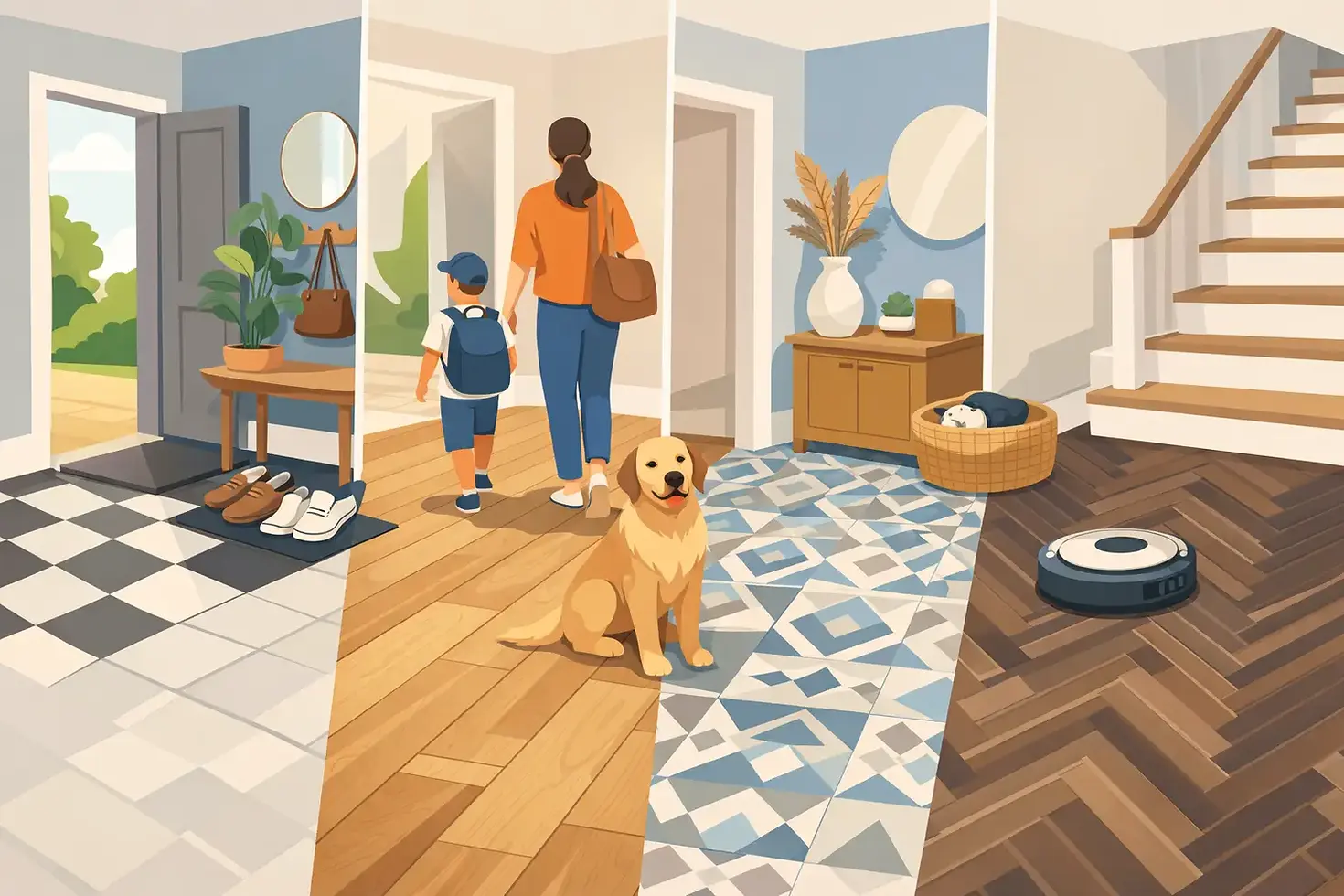
Your hallway has a harder job than almost any other room. It deals with wet shoes, muddy paws, school bags, dropped keys, and the constant traffic between rooms. That is why the best hallway flooring ideas need to look welcoming while standing up to real family life. A beautiful floor that shows every scuff or feels slippery underfoot will soon become a frustration.
The right choice depends on how your household uses the space, how much natural light it gets, and whether the hallway opens directly to the outdoors. Start with practical needs, then narrow down the colors, textures, and finishes that work with the rest of your home.
What Makes a Hallway Floor Work Well?
Hallways are usually narrow, high-traffic spaces, so durability matters more here than in a quiet bedroom. A good hallway floor should be easy to clean, resistant to everyday marks, and comfortable to walk on. If children, pets, or frequent visitors are part of the picture, it also needs to cope with moisture and grit brought in from outside.
Appearance still matters. Because the hallway is often the first area people see when they enter, the floor can set the tone for the rest of the house. Lighter finishes can make a dark entrance feel more open, while warmer wood looks or textured carpets can make a plain space feel more inviting.
Before settling on a material, consider the transition into nearby rooms. A hallway floor does not have to match every room exactly, but it should feel intentional. A sample viewed beside your wall color, doors, furniture, and natural light gives a much clearer answer than a small display under showroom lighting.
Best Hallway Flooring Ideas to Consider
Luxury vinyl for practical style
Luxury vinyl flooring is one of the strongest all-round options for busy hallways. It is available in convincing wood, stone, and tile designs, but it is softer and warmer underfoot than real tile. Many vinyl styles are water-resistant or waterproof, making them a sensible choice near front and back doors.
Wood-look vinyl works especially well when you want the character of oak, herringbone, or wide planks without worrying about every splash or muddy footprint. Stone and concrete effects suit more contemporary homes and pair well with neutral walls, black hardware, or painted paneling.
The trade-off is that the quality of the product and installation make a difference. A well-prepared subfloor helps vinyl look smooth and last longer. Very cheap options can feel thinner and may not give the same realistic finish, so it is worth comparing samples in your hallway before deciding.
Laminate for a clean wood-look finish
Laminate remains a popular hallway choice because it gives the look of wood at a more manageable price. It is tough, simple to maintain, and available in a wide range of colors, from pale Scandinavian-style oak to deeper walnut tones.
For a narrow hallway, plank-style laminate laid lengthwise can help draw the eye through the space. Mid-tone wood shades are often a practical middle ground: they feel warm without showing every bit of dust like very dark floors or every mark like very pale ones.
Not all laminate is suited to the same level of moisture. If your hallway regularly gets wet from shoes, umbrellas, or dogs, choose a water-resistant range and use good-quality mats at entrances. Wipe up standing water promptly, particularly around joins, to protect the floor over time.
Carpet for warmth and a quieter home
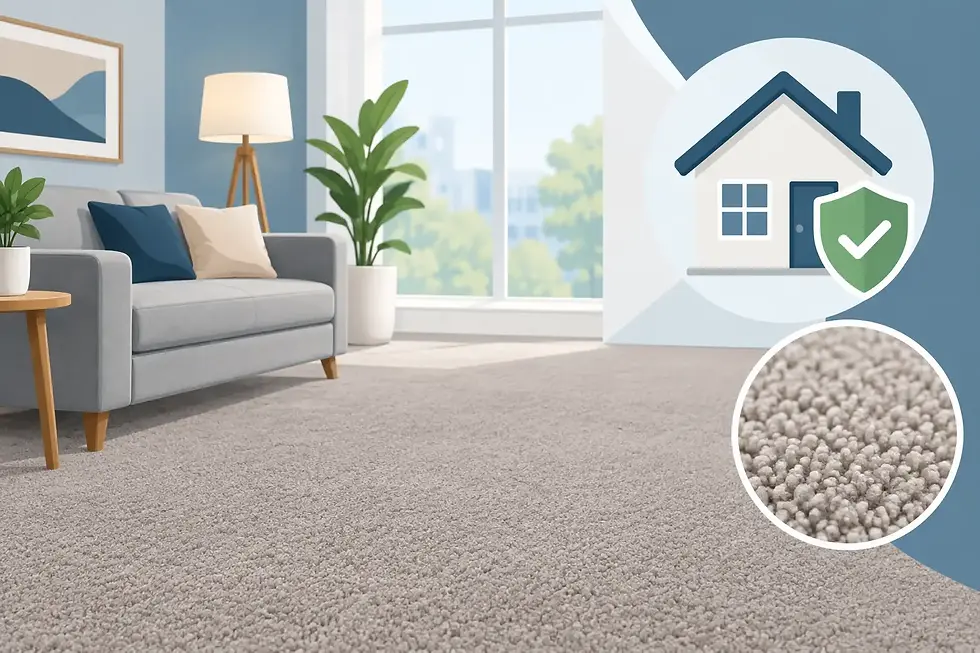
Carpet is still a great option for hallways, especially in homes where comfort and warmth matter most. It softens the sound of footsteps, feels welcoming underfoot, and can make an upstairs landing and staircase feel more connected. It is also a good choice for homes where a hard floor might feel cold or echoey.
For this area, avoid very light plain carpet unless your hallway gets little traffic. A flecked, heathered, or patterned design is far more forgiving with everyday marks. Twist pile carpets can be durable and practical, while loop styles offer texture but may be less suitable where pets' claws could catch.
A darker neutral is often the safest choice, but carpet does not have to be dull. Soft gray, warm taupe, muted blue, and subtle geometric patterns can give an entrance real personality. Pair it with a durable entrance mat so the carpet has an extra layer of protection where it needs it most.
Tile-effect vinyl for an easy-care entrance
If you love the crisp look of ceramic or porcelain tile but want less maintenance and a warmer surface, tile-effect vinyl is worth considering. It offers a wide choice of stone, slate, marble, and patterned-tile looks without the cold feel of a traditional tiled floor.
This is particularly useful in small entrance halls where a patterned floor can create impact without overwhelming the room. Choose a design with a little movement or variation rather than a flat, solid color. It will be more forgiving between cleans and can make the space feel more considered.
Engineered wood for a natural finish
Engineered wood brings genuine wood character to a hallway and can add value to the overall look of a home. Unlike solid wood, it is designed in layers for greater stability, although it still needs protection from excess moisture and grit.
This option suits a hallway that is not constantly exposed to wet outdoor conditions, or one with a well-managed entrance area. Use mats inside and outside the door, and be prepared to keep on top of spills. It is a higher-investment choice, but the natural grain and depth are difficult to replicate.
A runner over hard flooring
A runner is not a floor covering on its own, but it can transform a hard-floor hallway. It adds warmth, reduces noise, and helps protect the surface in the center of a busy route. It is also a useful way to introduce color or pattern without committing to a bold floor across the entire area.
Choose a runner with a low profile and a secure non-slip backing. In a long, narrow hall, it can make the space feel more finished while still leaving the practical hard floor visible around the edges.
Choosing the Right Color and Finish
Light flooring can make a cramped or dark hallway feel bigger, but bright white and very pale gray may show dirt quickly in a family home. Medium oak, greige, natural stone, and soft gray are dependable choices because they balance brightness with everyday practicality.
Dark floors can look smart and dramatic, particularly with light walls, but they often reveal dust, pet hair, and scratches more readily. If you like deeper shades, choose a textured wood grain, a patterned carpet, or a finish with tonal variation. These details hide daily wear better than a completely smooth, uniform surface.
Finish matters too. High-gloss floors can reflect light beautifully, but they may show streaks and footprints. Matte or lightly textured finishes are generally easier to live with and can provide more grip near an entrance.
Do Not Forget the Details
The best floor can still struggle without the right finishing touches. A proper barrier mat at the door catches moisture and debris before it reaches the main floor. For hard surfaces, consider a second mat or runner further inside the hallway, especially if the route leads straight to the kitchen or living room.
Door clearance, thresholds, stairs, and adjoining rooms should also be considered before ordering. Different materials have different thicknesses, and a professional measure helps avoid awkward transitions or surprises on fitting day. It is also the ideal time to see several samples against your existing decor rather than guessing from a photograph.
A hallway floor should make coming home easier, not create another job. Whether you prefer durable vinyl, affordable laminate, soft carpet, or a natural wood finish, choose the option that suits how your home is actually used. Home View Carpets can bring samples to your home, so you can compare colors and finishes where they will really live before making a decision.


Comments