

Best Flooring for Stairs: What Works Best?
Stairs are where flooring decisions get real fast. A material that looks great in a living room can feel slippery, loud, or hard underfoot once it’s wrapped over a staircase. If you’re trying to choose the best flooring for stairs, the right answer usually comes down to three things: safety, durability, and how your home actually lives day to day.
For a busy family home, stairs take a lot of wear. People run up and down them, pets use them, kids sit on them, and every bit of dirt from the hallway seems to land there first. That’s why stair flooring needs a bit more thought than a flat room. It has to look good, of course, but it also needs to hold up and feel secure every time you use it.
How to choose the best flooring for stairs
The biggest mistake homeowners make is choosing based on looks alone. Stairs are a high-traffic area with edges, corners, and more chance of slips than any other part of the house. So while style matters, performance matters more.
Start with grip. A glossy surface might suit your design plans, but if it feels slick in socks, it may not be the best fit. Then think about noise. Hard flooring on stairs tends to sound louder than people expect, especially in family homes. After that, look at maintenance and budget. Some options are easy to keep clean but cost more upfront, while others are affordable but may show wear faster.
There’s also the question of matching your upstairs and downstairs flooring. In some homes, continuity looks smart and intentional. In others, using a different material on the stairs gives a better balance of comfort and practicality. It really depends on the layout, who uses the stairs most, and the finish you want.
Carpet is often the best flooring for stairs in family homes
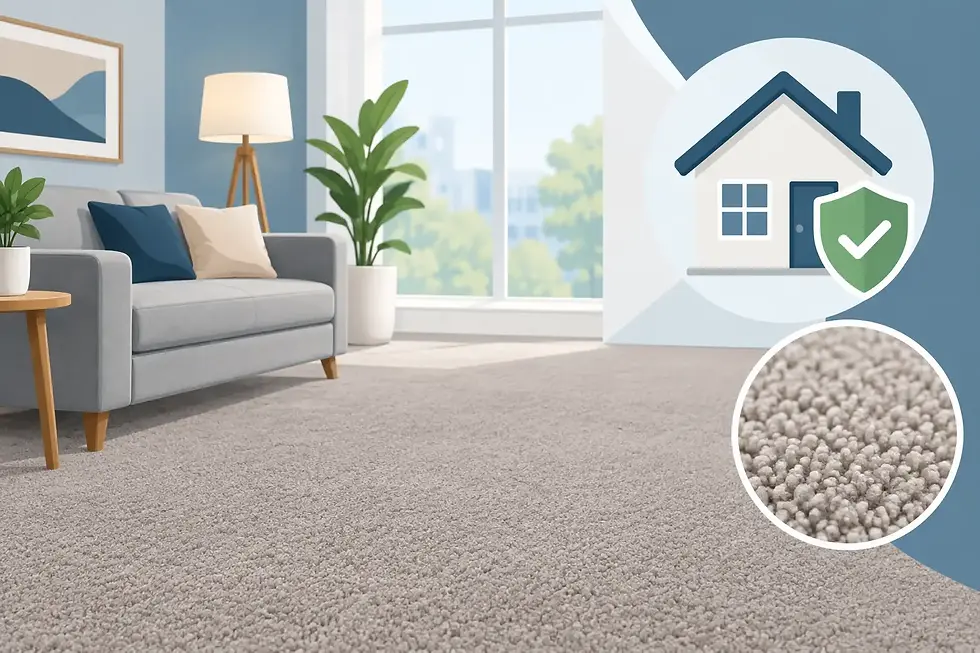
For many households, carpet is still the safest all-around choice. It offers good grip, softens footfall, reduces noise, and feels warmer than hard flooring. If you have children, pets, or a staircase that gets constant use, carpet is usually the most forgiving option.
A good stair carpet also hides minor wear better than many hard surfaces. That matters because stair treads often show traffic patterns sooner than bedroom or living room floors. A textured pile or subtle flecked design can help disguise marks and everyday dirt, which is useful in busy entryways and hall-stair-landing areas.
That said, not every carpet is ideal for stairs. Very thick or loose styles can wear unevenly and may not hold their shape as well on stair edges. In most cases, a durable twist or low, dense pile works better. It gives you a neat finish and handles regular foot traffic more reliably.
Wool blends are popular because they feel great and wear well, but there are also synthetic options that offer excellent stain resistance and strong value for money. If you want comfort without overspending, this is often where a home visit helps most - seeing samples in your own lighting makes it much easier to judge texture and color against your hallway, paint, and woodwork.
Wood flooring on stairs looks smart but has trade-offs
Real wood stairs have a clean, high-end look, and they work particularly well in modern homes or period properties with the right character. They’re durable, easy to wipe down, and can make a hallway feel more open.
The downside is obvious once you step on them. Wood can be slippery, noisier than carpet, and less forgiving if someone slips or drops something. Families with young children or older relatives often find that full wood stairs look great but don’t always feel like the safest everyday option.
One way around that is to combine wood stairs with a stair runner. This gives you the style of exposed wood at the edges with the grip and softness of carpet through the middle. It’s a strong middle-ground option if you want a more decorative finish without giving up practicality.
You’ll also need to think about wear. Stair treads take concentrated impact, so the finish matters as much as the wood itself. Scratches, scuffs, and dull patches tend to show faster on stairs than they do on open floors.
Laminate can work, but it’s not always the first choice
Laminate is often chosen because it gives the look of wood at a lower price. On straight floors, it can be a very practical option. On stairs, it becomes more of a case-by-case choice.
The main concern is slip resistance and edge fitting. Not all laminate products are designed to perform well on stairs, and the installation needs to be right for a neat, secure finish. If the product or fitting method is wrong, stair edges can end up looking awkward or wearing poorly over time.
There’s also the sound factor. Laminate stairs can be loud, especially in homes with open hallways or hard surfaces nearby. If you already have a busy, echo-prone space, adding more hard flooring may not give you the feel you want.
Still, laminate can be suitable in some homes, especially if you’re aiming for a consistent look between levels and you choose a product made for stair use. It’s just not the automatic budget winner people sometimes expect once fitting details are taken into account.
Luxury vinyl is practical, but stairs need careful planning
Luxury vinyl flooring has become a favorite in many homes because it’s durable, lower-maintenance, and available in realistic wood and stone looks. For staircases, it can be a good option if you want a hard surface that’s easier to live with than real wood.
Vinyl tends to be quieter and a bit softer underfoot than laminate, which makes it more comfortable on stairs. Many homeowners also like that it handles everyday mess well. If you have pets or want a surface that wipes clean easily, it has real advantages.
But again, stairs are not the same as a flat room. The product needs to be suitable for stair installation, and the finish should provide decent grip. Very smooth surfaces may not feel secure enough, especially if the staircase is steep.
This is one of those areas where seeing the sample at home matters. A vinyl plank that looks warm and textured in a showroom can look quite different under your hallway lighting. Companies like Home View Carpets Limited built their service around that exact issue - helping customers compare real samples at home so the final choice feels right, not guessed.
What matters most: safety, noise, and maintenance
If you strip the decision back to what matters most, safety usually comes first. That’s why carpet remains such a popular stair choice. It offers the best overall grip and the softest landing underfoot.
Noise comes next, especially in family homes. Hard flooring creates more sound, and that can travel through the whole house. If you want quieter mornings, less echo, and a softer feel, carpet has a clear edge.
Maintenance can pull the decision the other way. Hard surfaces are easier to wipe down, which appeals to pet owners and landlords. But easy cleaning is only part of the picture. If the surface feels less safe or shows every scuff, it may not feel easier in the long run.
Budget matters too, but it’s worth looking beyond the headline price. Staircases are fiddly to fit, and the cheapest material is not always the cheapest finished job. A product that needs specialist trims, stair nosings, or more complex fitting can shift the numbers quickly.
The best stair flooring depends on who lives in the house
If you have kids, older adults, or anyone unsteady on stairs, carpet is usually the safer bet. If style is the top priority and you want a more architectural look, wood or vinyl may suit you better, especially with a runner or added slip resistance.
If it’s a rental property, you may lean toward durability and ease of maintenance. If it’s your forever home, comfort and noise reduction may matter more. There isn’t one perfect answer for every staircase, which is why a quick look at a sample board in a store often doesn’t tell you enough.
The best flooring for stairs is the one that works in your home, with your lighting, your traffic levels, and your budget. That usually becomes much clearer when you compare options where they’ll actually be used, next to your wall color, banister, hallway floor, and everyday clutter.
If you’re unsure, keep it simple. Choose the option that feels safe, looks right in your home, and won’t annoy you six months from now. Stairs get used too often for a flooring choice you only half like.


Comments