

Best Lounge Carpet Colors for a Welcoming Home
A carpet sample that looks like a warm neutral in a store can look pink, gray, or surprisingly dark once it is laid beside your sofa. That is why the best lounge carpet colors are not simply the shades trending online. They are the ones that suit your room’s natural light, your existing furniture, and the way your household actually lives.
For a lounge, carpet has a big visual job. It covers a large area, sits beneath nearly everything else in the room, and needs to keep looking good through movie nights, muddy paws, children, guests, and everyday foot traffic. The right color makes the room feel pulled together. The wrong one can make a spacious lounge feel gloomy or make a small mark seem impossible to ignore.
Best Lounge Carpet Colors to Consider
There is no single best carpet color for every home, but a few families of shades work particularly well in living spaces. The key is choosing the right version of each one for your room.
Warm beige and soft taupe
Beige has moved on from the flat, yellow-toned carpets many people remember. Modern warm beiges, oat shades, and soft taupes can make a lounge feel calm, comfortable, and easy to decorate around. They work especially well with cream walls, wood furniture, tan leather, linen fabrics, and natural textures.
Taupe is often the safer choice if you are worried about a pale carpet showing every little mark. It has more gray and brown depth than standard beige, so it can hide day-to-day dust and light traffic better while still keeping the room bright. A flecked or heathered taupe is particularly practical for a busy family lounge.
The trade-off is that very warm beige can look yellow in strong afternoon sunlight or against cool gray paint. Always look at the sample next to your walls and upholstery before deciding.
Greige for flexibility
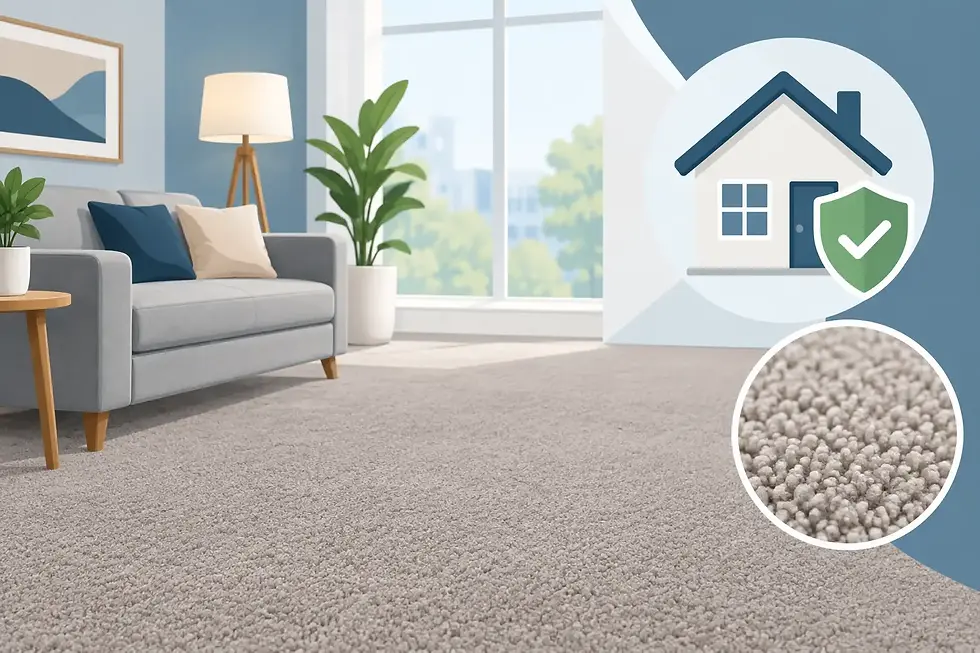
Greige - a balanced mix of gray and beige - remains one of the most useful lounge carpet colors because it does not force the rest of your decor in one direction. It can sit comfortably with warm oak furniture, cooler painted pieces, black metal accents, or a colorful feature chair.
Choose a lighter greige if the room has limited daylight and you want it to feel more open. Go a little deeper if you have children, pets, or a high-traffic route through the lounge. Mid-tone greige tends to be forgiving without making the room feel heavy.
Be mindful of undertones. Some grays lean blue, some lean brown, and some have a subtle lilac cast. Under your own lighting, those differences become much more obvious than they do under showroom lights.
Mid-tone gray for busy homes
A medium gray carpet is a popular choice for good reason. It is smart, versatile, and usually better at disguising everyday marks than cream or very pale gray. It can create a clean, modern base for a lounge with white walls, charcoal furniture, navy accents, or soft blush and green accessories.
For homes with lots of natural light, mid-gray can look polished without making the room feel cold. In a north-facing lounge or a room with smaller windows, however, a blue-gray carpet may feel a little stark. A warmer gray with beige or brown flecks will usually give a friendlier result.
If you like changing cushions, throws, and wall colors over time, gray offers flexibility. It is a good long-term choice when you do not want your carpet to dictate every future decorating decision.
Natural browns and mushroom shades
Brown is often overlooked, but softer mushroom, stone-brown, and mocha-flecked carpets can bring real warmth to a lounge. These tones pair naturally with wood floors in adjoining rooms, exposed brick, cream paint, and traditional furniture. They also make a practical choice for households where shoes, pets, or children mean the carpet has to work hard.
Avoid choosing a very dark solid brown unless the lounge is large and well lit. Deep colors can look rich and cozy, but they also absorb light and can make a compact room feel smaller. A lighter brown with mixed fibers gives much of the same practicality with a less heavy finish.
Deep blue, green, and charcoal for a statement
A darker carpet can be a great choice when you want the lounge to feel snug, dramatic, or more formal. Deep navy works beautifully with brass, cream, warm woods, and light walls. Forest or olive green can feel grounded and relaxed, especially in homes with natural materials and plenty of plants. Charcoal creates a strong contemporary backdrop.
These colors are not just for large houses, but they need balance. Keep walls and larger furniture lighter, and make sure the room has enough lighting for evenings. Dark carpet is good at concealing many marks, yet pale lint, pet hair, and crumbs can stand out more clearly than they do on a mid-tone patterned option.
Start With What Will Stay in the Room
Before choosing carpet, look at the things you are least likely to replace soon. Your sofa, curtains, fireplace surround, built-in units, and wall color should guide the decision more than a cushion you may swap next season.
If your sofa is bold - perhaps navy, emerald, rust, or patterned - a quieter neutral carpet usually gives the room breathing space. If the sofa is cream, gray, or beige, you have more freedom to introduce interest through a darker or more textured carpet.
It also helps to think about contrast. A pale sofa on a pale carpet can look airy, but it may lack definition unless you use a rug or darker furniture. A dark sofa with dark carpet can feel cozy, although it can blur together in a room without much light. Aim for a noticeable difference in depth between the biggest pieces, rather than matching everything exactly.
Let Your Lounge Lighting Make the Final Call
Lighting changes color more than most homeowners expect. Morning light, afternoon sun, shaded rooms, warm bulbs, and cool LED lighting can all alter what you see in the carpet pile.
A north-facing lounge often benefits from warmer carpet tones such as beige, taupe, mushroom, or warm gray. South-facing rooms can handle cooler grays and deeper shades more easily because they receive stronger natural light. If your lounge is used mostly at night, turn on the lamps you normally use and check samples under those conditions too.
This is where choosing at home makes a real difference. A sample can sit beside the sofa, under the window, and near the doorway to adjoining rooms. You can see how it changes through the day rather than relying on a quick judgment under retail lighting.
Choose a Color That Fits Real Life
The best-looking carpet is not always the best choice for the way you use your lounge. A pale cream can be lovely in a quiet, low-traffic room, but it may cause stress in a home with young children, dogs, or frequent visitors. On the other hand, an extremely dark carpet may hide soil but show lint and make a small room feel enclosed.
For many active households, the sweet spot is a mid-tone carpet with a subtle twist, fleck, or heathered finish. The variation breaks up the appearance of small marks and tracks while still looking refined. It is usually more forgiving than one perfectly flat, solid color.
Think about the route through the room too. If people walk from the front door through the lounge to the kitchen, choose a shade with enough depth to handle that traffic. If the room is mainly for relaxing and entertaining, you can prioritize a lighter, softer look.
Do Not Match Carpet to Paint Too Closely
Matching carpet exactly to the walls can leave a lounge looking flat, especially when both are pale. Instead, choose colors that relate to one another. Warm white walls can work with oatmeal, taupe, or warm gray. Cool white and blue-gray walls may suit soft gray, stone, or a deeper charcoal. Green walls can look excellent with beige, mushroom, or natural brown.
Bring paint swatches, curtain fabric, and a cushion cover into the decision if you can. You are not trying to create a perfect color match. You are checking that the undertones do not fight each other.
Why Samples at Home Matter
Carpet is a long-term purchase, and it is worth seeing more than a tiny image on a screen. A proper in-home consultation lets you compare colors where they will actually live, with your furniture, lighting, and decor around them. You can also judge pile texture, comfort, and how a shade looks across a larger sample.
Home View Carpets brings the choice to your door, making it easier to compare practical neutrals, softer warm tones, and bolder options without spending weekends traveling between stores. With measuring and fitting quotes handled at home, the process is simpler and the color decision is based on what you can truly see.
The carpet you choose should make you feel pleased every time you walk into the lounge, not cautious about using the room. Put samples in your own light, trust what works with your everyday life, and give yourself time to notice which color makes the whole space feel right.


Comments